From Exam Rooms to Exam Scores: How AI Is Transforming Healthcare Documentation with Tools Like SOAPsync
Artificial Intelligence (AI) in healthcare is no longer a futuristic concept—it’s happening now, and it’s reshaping how clinicians work, learn, and care for patients. One of the most striking examples of this progress was recently highlighted in an article by “Fierce Healthcare”, which reported a historic accomplishment: “OpenEvidence”, an AI system trained to understand clinical material, scored a “perfect 100 on the USMLE Step 1 exam”—a test that medical students often spend months preparing for.
“OpenEvidence scored 100% on the U.S. Medical Licensing Examination (USMLE) Step 1, a benchmark exam for medical students, making it the first known model to achieve a perfect score.”
— Fierce Healthcare, August 2025
This is far more than a fun headline. It represents a clear sign of what AI can do—not just in theory, but in real clinical settings. AI models like OpenEvidence are demonstrating that they can “understand, synthesize, and apply complex medical knowledge”. But what does this mean for real-world clinicians—especially those working in the often emotionally demanding world of mental health care?
Let’s bring it down from test scores to therapy rooms—and introduce a tool designed with that very environment in mind.
🧩 Meet SOAPsync: AI That Thinks Like a Mental Health Clinician
Inspired by breakthroughs like OpenEvidence, the team behind SOAPsync set out to solve a deeply felt problem in the world of mental health: the burden of clinical documentation.
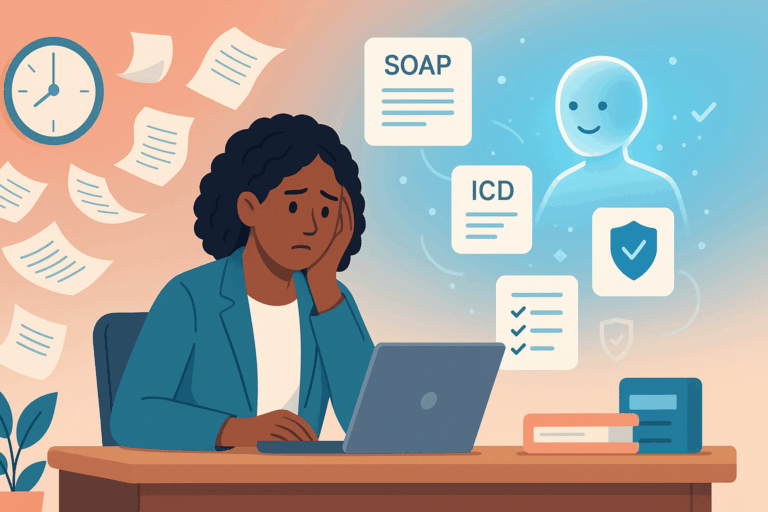
Mental health professionals—psychiatrists, psychologists, and psychiatric nurse practitioners—spend hours every week writing and editing notes from patient sessions. These SOAP notes (Subjective, Objective, Assessment, and Plan) are essential for legal compliance, clinical continuity, and insurance billing. But they’re also time-consuming and mentally draining, often taking away from time that could be spent with patients—or simply resting and recharging.
That’s where SOAPsync comes in.
Built by clinicians, for clinicians, “SOAPsync is an AI-powered documentation assistant” that turns typed session input into complete, structured SOAP notes in real time. It understands the clinical mind, and more importantly, it understands the clinical workload.
🧠 The True Cost of Documentation—and the Value of AI Support
Let’s face it: documentation in mental health care isn’t just about jotting down what happened in a session. It’s about accuracy, nuance, clinical judgment, and making sure that what’s written supports both patient care and professional protection. But too often, documentation becomes a time sink that contributes to burnout and reduces face-to-face time with patients.
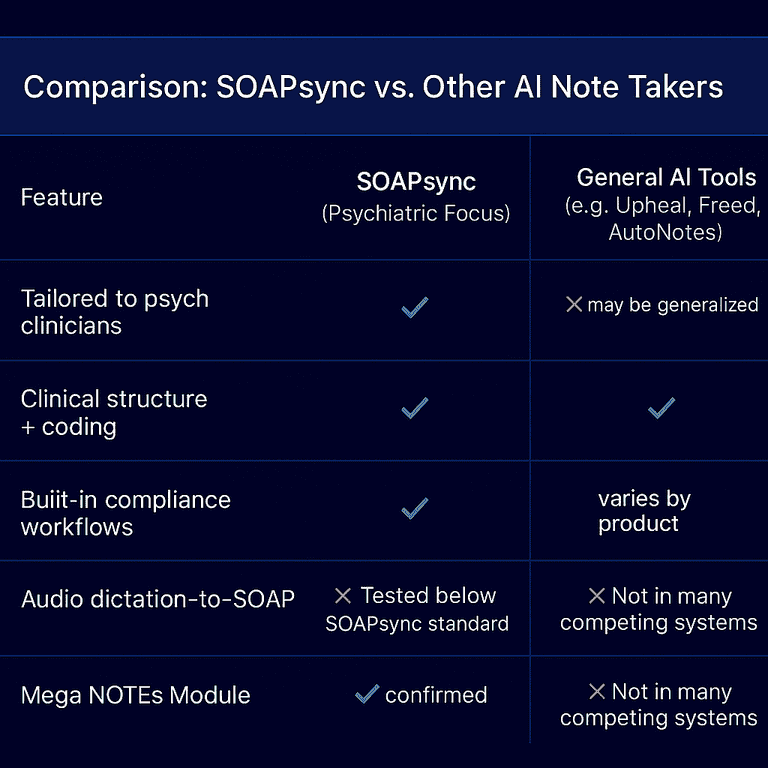
SOAPsync aims to change that by offering:
✅ AI-Powered SOAP Note Generation: Captures and structures information into clear, compliant notes—instantly.
✅ Clinical Template Matching: Recommends the best format based on the therapy style or session type.
✅ ICD Coding Suggestions: Offers coding insights to support accurate billing and record-keeping.
✅ Thoughtful Design: Built with direct input from mental health professionals, the platform feels intuitive and supportive—not like another chore.
“Clinicians shouldn’t have to choose between caring for patients and completing documentation. With AI, they don’t have to.”
— The SOAPsync Team
💡 Beyond Automation: AI as a Partner, Not a Replacement
One of the biggest fears about AI in healthcare is that it might try to replace clinicians. But the real story is much more collaborative. Tools like OpenEvidence and SOAPsync aren’t substitutes for human judgment—they’re amplifiers of it.
When OpenEvidence aced the USMLE, it didn’t prove that AI could replace doctors. It proved that AI can deeply understand medical content and support decision-making. Similarly, when SOAPsync generates a SOAP note, it’s not thinking for the clinician—it’s helping them move faster and stay focused on what matters: the patient.
That’s what the future of healthcare looks like. Not cold, robotic systems making decisions on their own, but “smart, human-guided tools*” that make life easier for the people who do the healing.
🎁 Want to See SOAPsync in Action?
If you’re a psychiatrist, psychologist, or psychiatric nurse practitioner who’s tired of spending your evenings catching up on notes, SOAPsync might just change your life—or at least your workflow.
We’re currently offering a $50 discount coupon for mental health professionals who reach out to learn more about how SOAPsync works.
👉 Interested? Just share your name and phone number, and someone from our team will reach out personally to show you what SOAPsync can do for you.
🔍 Source:
Fierce Healthcare: [OpenEvidence AI scores 100% on USMLE; company offers free explanation model](https://www.fiercehealthcare.com/ai-and-machine-learning/openevidence-ai-scores-100-usmle-company-offers-free-explanation-model)
Final Thoughts
The perfect exam score by OpenEvidence was a major moment in AI and healthcare. But the everyday win comes when tools like SOAPsync help real clinicians reclaim their time, reduce burnout, and focus on what they do best—helping people heal.
AI in healthcare isn’t just about pushing boundaries. It’s about creating balance. And with SOAPsync, that balance is finally within reach for mental health professionals.